
YWS Bearing | Shandong Yuki Bearing
Let YUKI Quality Turning the World.
86-0531-85556568
yuki@ywsbearing.com
yuki@ywsbearing.com
- All
- Product Name
- Product Keyword
- Product Model
- Product Summary
- Product Description
- Multi Field Search
Views: 0 Author: YWS Bearing Editorial Team Publish Time: 2026-11-13 Origin: YWS Bearing; materials references from Carpenter Technology official alloy pages
Short answer: 440C and 316 stainless steels are associated with different material priorities. Carpenter Technology describes heat-treated 440C as a hardenable steel used in bearings, while 316 is a molybdenum-bearing austenitic grade with improved corrosion resistance over 304 in chlorides and many other environments. Neither grade name alone proves that a complete bearing suits a particular load, lubricant or corrosive medium. Confirm every component and the actual operating conditions before ordering.
This is a general material-screening guide based on Carpenter Technology’s alloy information, not a bearing-life calculation or corrosion guarantee. Heat treatment, surface condition, mating materials, lubricant and the actual medium all affect the result.
Buyer question | 440C stainless steel | 316 stainless steel | What to verify for a bearing |
|---|---|---|---|
What property is the grade known for? | High-carbon chromium steel that can be hardened and tempered. Carpenter identifies it as a bearing steel and reports about HRC 60 after heat treatment. | Molybdenum-bearing austenitic stainless steel. Carpenter describes improved corrosion resistance over 304 in chlorides and many other environments. | Request the exact grade and heat-treatment condition for the specified component. Do not infer hardness, load rating or life from a material name. |
What is the corrosion trade-off? | It provides stainless properties, but is not immune to corrosion. Carpenter notes condition and temperature limitations and recommends considering environmental factors. | Its molybdenum content improves resistance over 304 in stated environments, but does not make it suitable for every chloride level, chemical, temperature or crevice condition. | State the medium, concentration, temperature, cleaning method, exposure time and whether deposits or crevices are present. Ask for evidence relevant to those conditions. |
Can the grade be assumed throughout the bearing? | No. Rings and rolling elements can have different material requirements from a cage, seals or lubricant. | No. “316 bearing” may describe only some parts or a listing option unless the bill of materials says otherwise. | Confirm rings, balls or rollers, cage, seals, washers and lubricant separately; request a component-level material statement or certificate. |
Does the grade establish bearing capacity? | No. Capacity depends on the complete bearing design and its verified data. | No. Corrosion descriptions do not establish load or fatigue capacity. | Check exact model, geometry, clearance, speed, mounting and manufacturer ratings against the application. |
A rolling bearing is an assembly. Rings and rolling elements carry contact loads; a cage guides the rolling elements; seals or shields, washers and lubricant have their own material and operating limits. A product title saying “stainless steel” does not identify every component’s alloy. Ask for a component-by-component material declaration and supporting documentation.
The YWS SS61806-2RS / S61806-2RS stainless ball bearing listing is an example, not proof that each ring and ball is 440C. Confirm its exact configuration and material before relying on a grade claim. The YWS F6-12 thrust bearing listing mentions “304 stainless” in its title while its material field lists several options. Treat that as a reason to identify the requested option in writing, not as confirmation that a particular unit is 316 or 304 throughout.
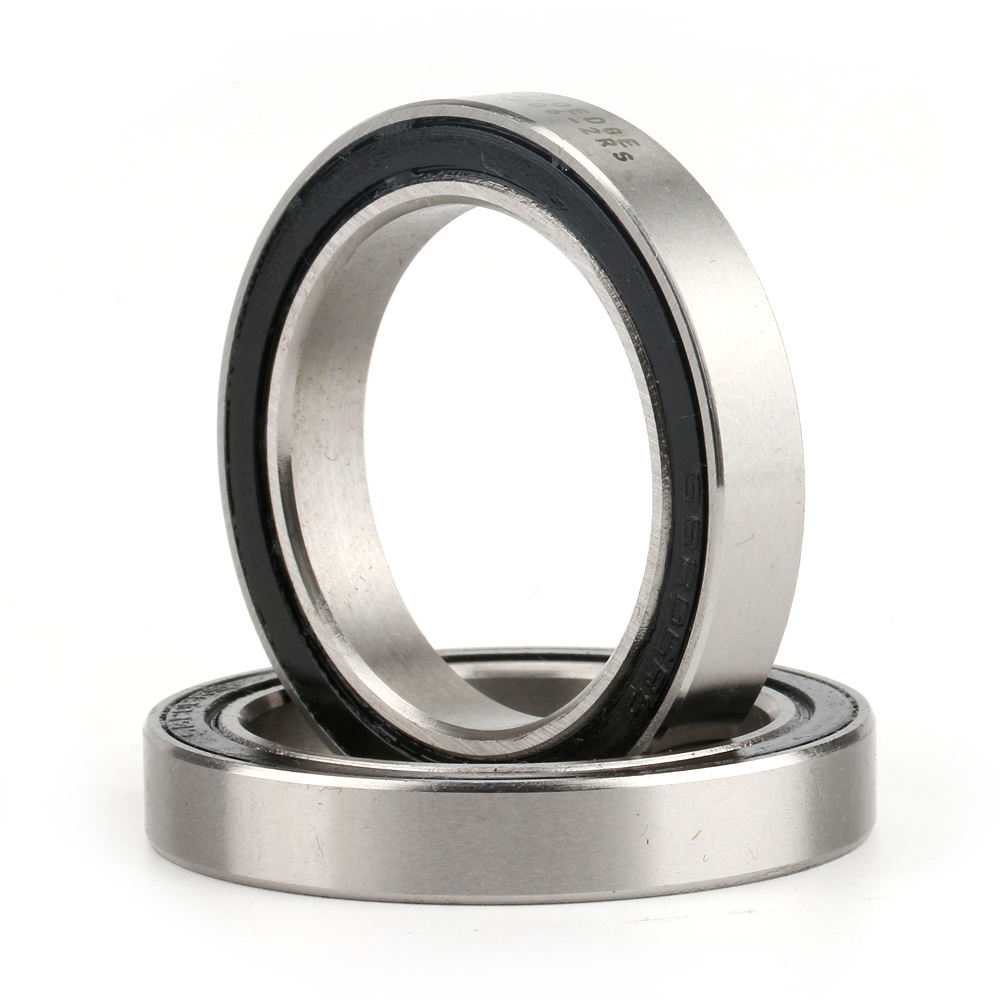
SS61806-2RS listing image. A photo identifies the example, but cannot certify its material grade.
View the SS61806-2RS listing and request configuration details.
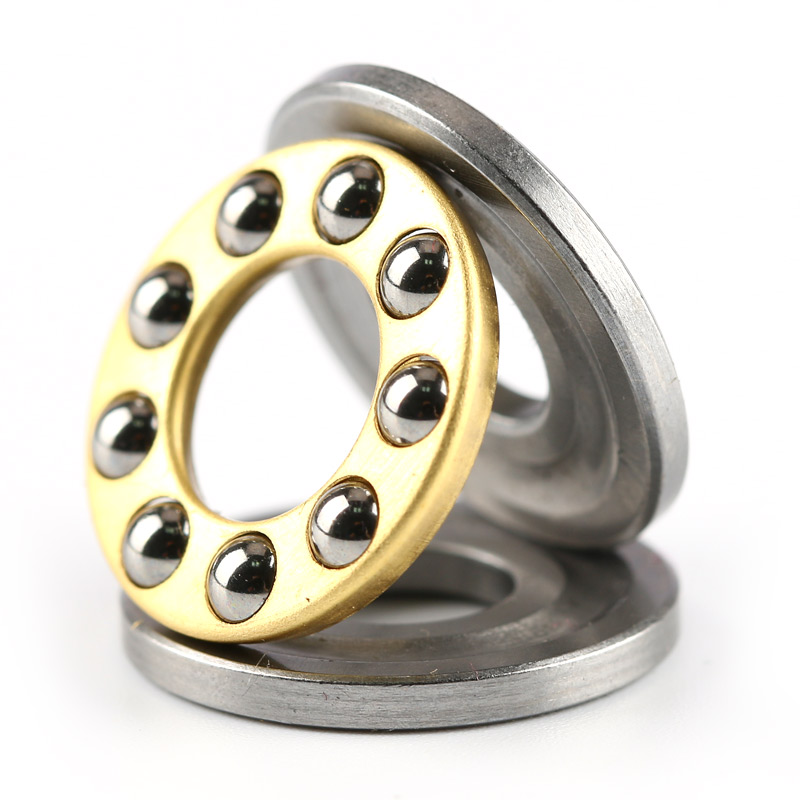
F6-12 thrust bearing listing image. The listing shows multiple material options; name the exact option in the quotation request.
Browse the YWS thrust ball bearing range. Check the selected model page for its exact dimensions and configuration.
Application medium: water, washdown solution, salt, process chemical or another exposure; include concentration and temperature where known.
Operating conditions: radial and axial loads, speed or motion cycle, cleaning temperature, duty cycle and mounting details.
Required materials: specify rings, rolling elements, cage, seals, washers and lubricant separately where relevant.
Evidence: request a component-level material statement, applicable standard and a certificate traceable to the offered batch when required.
Corrosion evaluation: identify test method and exposure conditions. A generic “stainless” statement is not a test result for your application.
Replacement details: full designation and suffix, drawing or dimensions, clearance and quantity.
Not as a universal guarantee for every bearing and environment. Carpenter describes 316 as having improved resistance over 304 in chlorides and many other environments; it describes 440C as a hardenable bearing steel with stainless properties and condition-related limits. Compare the actual alloy condition and exposure. For critical use, request application-specific evidence or testing.
Matching dimensions do not prove equal load capacity, internal design, component materials, clearance, lubrication or service performance. Confirm the complete configuration and technical data for each model.
No. Ask for a component-level material list for rings, rolling elements, cage, seals, washers and lubricant. A title or general listing field may not specify every component.
No. The grade alone does not establish food-contact approval, sanitation suitability or seawater performance. Confirm regulations, surface finish, cleaning procedure and exposure with the supplier and responsible engineer.
Send the full model and suffix, drawing or measured interfaces, quantity, loads and speed, exposure medium and temperature, component-grade requirements, and certificate or test requirements. Contact YWS Bearing to request confirmation and a model-specific quotation.
Carpenter Technology: 440C — bearing-steel use, heat treatment, approximate hardness and condition-related limits.
Carpenter Technology: 316 — austenitic grade, molybdenum and corrosion comparison with 304.
YWS SS61806-2RS and YWS F6-12 listings — reviewed for title, image and material-option wording; exact offered composition still requires confirmation.